The Dead Economist Society
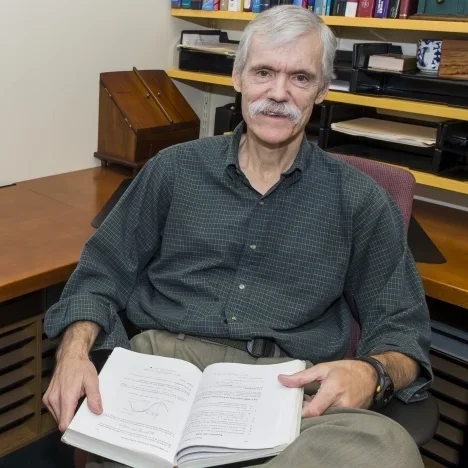
About Dr. James Brown
Dr. Brown is a Professor of Economics at Rice University, where he's taught since earning his PhD from the University of Chicago. He previously held academic positions at Princeton University and SUNY Stony Brook, as well as a visiting position with the President's Council of Economic Advisers, and his research focuses on labor economics, with work published in journals like Econometrica, the American Economic Review, and the Journal of Political Economy. He's been recognized repeatedly for teaching excellence, including Rice's George R. Brown Award for Superior Teaching and the university's Certificate of Highest Merit, and was named a 2018 Piper Professor by the Minnie Stevens Piper Foundation. With that mix of research depth and a reputation as one of Rice's most engaging lecturers, here are his book recommendations:
Top Pick:
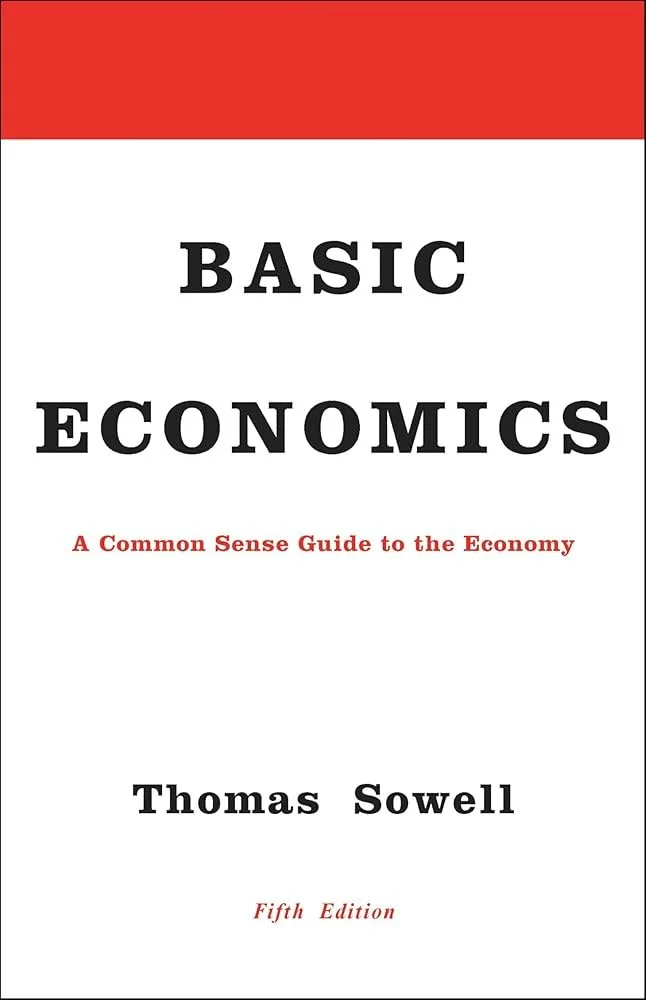
Basic Economics by Thomas Sowell
Overview
Basic Economics by Thomas Sowell is a plain-language introduction to how economies work, built entirely around real-world examples rather than jargon, equations, or graphs. It covers core ideas like scarcity, prices, incentives, and trade-offs, showing how these forces play out across different countries, time periods, and political systems, and revealing why certain policies succeed or fail regardless of intentions.
Simple ideas
Prices signal scarcity, incentives shape behavior more than intentions do, and trade-offs are unavoidable, so every policy choice carries real costs, not just benefits.
Lasting impact
The book has reshaped how millions of readers evaluate policy, teaching them to look past stated intentions and ask what incentives and trade-offs a decision actually creates.
Best Theory Book:
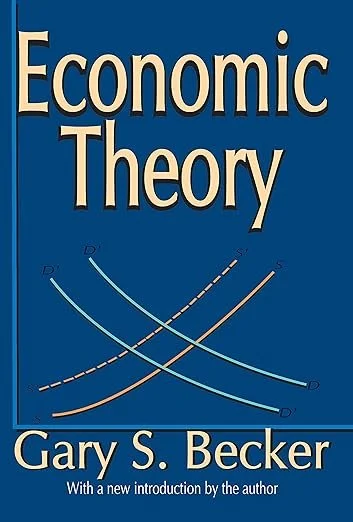
Economic Theory by Gary S. Becker
Overview
Economic Theory by Gary S. Becker is a rigorous, technical treatment of price theory, built around formal models of rational choice rather than narrative examples. It works through supply, demand, and utility maximization, then extends these tools beyond traditional markets to explain choices like marriage, crime, and discrimination, showing that economic reasoning applies far beyond conventional commerce.
Simple ideas
Rational choice models explain human behavior broadly, and formal price theory reveals how supply, demand, and utility maximization interact.
Lasting impact
Becker's work has reshaped economics itself, pushing generations of economists to apply price theory and rational choice to family, crime, and social behavior once thought beyond economic analysis.
A Deeper Dive:
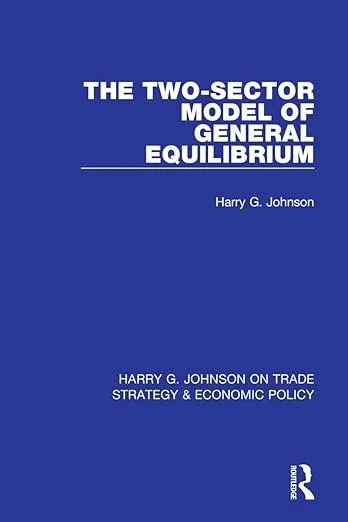
The Two-Sector Model of General Equilibrium by Harry G. Johnson
Overview
The Two-Sector Model of General Equilibrium by Harry G. Johnson is a technical monograph presenting, in condensed geometric form, a model of production and income distribution across two sectors. It builds the model using diagrammatic tools drawn from international trade theory, then applies it to real policy questions like redistributive taxation, trade union bargaining, and minimum wage laws, before converting the framework into a growth model with a steady-state path.
Simple ideas
Commodity prices, factor prices, and income distribution are shown to be interlinked, and general equilibrium analysis reveals feedback effects that partial equilibrium models miss.
Lasting impact
Johnson's exposition gave students and economists their first accessible, unified treatment of a model previously scattered across journal articles, shaping how income distribution and public finance questions were taught for decades.